
One Difference Makes All the Difference
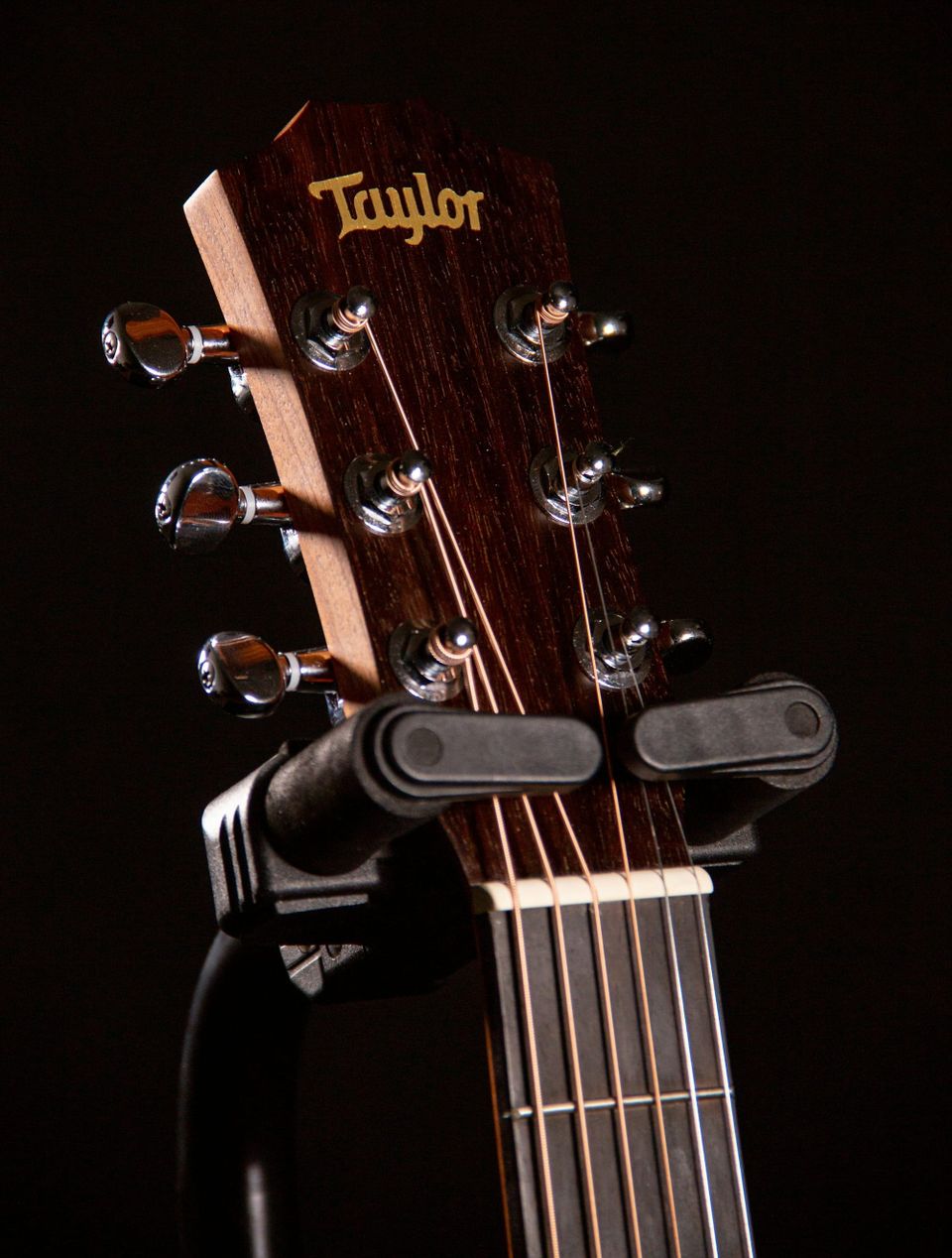
Taylor guitars. Gibson guitars. Both are American icons, built by hand, born from obsession with tone and craftsmanship. Both companies faced the same question every founder eventually faces: what happens when I leave?
How they answered that question tells you everything about the economy we have and the economy we could build.
First, Gibson faced this question. After years of mismanagement and over $500 million in debt, the company filed for Chapter 11 bankruptcy in May 2018. KKR Credit Advisors, which had been buying Gibson’s distressed debt at pennies on the dollar, converted $198 million in notes into a 62% equity stake. They didn’t buy Gibson. They inherited it through a bankruptcy court.
What followed was branded “Share of Success,” a case study in what Ownership Works is calling success, suggesting employee ownership. It isn’t. It’s a discretionary profit-sharing arrangement: no equity, no trust, no legal protections. The board (which KKR controls through three of eight seats plus the chairman) can end it tomorrow.
Here are the numbers. In 2021, Gibson announced $7 million in employee profit sharing across roughly 800 workers. That’s less than $9,000 per person. At the same time, KKR extracted $225 million for itself through a dividend recapitalization, loading the company that had just emerged from bankruptcy with $250 million in new debt. For every dollar that went to the people making the guitars, thirty-two dollars went to the financial engineers who owned the paper.
Employees hold zero equity. Zero board seats. Zero voting rights. On Glassdoor, Gibson carries a 2.9 out of 5 rating, with 41% of employees recommending the company to a friend. Workers describe mandatory overtime with no notice, a rigid culture with “lots of favoritism,” and “no room for growth.” One review calls it “one of the most horribly run companies I have ever worked for.” S&P revised Gibson’s outlook to negative in 2025, citing tariff exposure and the debt KKR loaded onto the balance sheet. The guitars are still beautiful. The ownership structure is extraction dressed in language it doesn’t deserve.
Now the story of Taylor.
In January 2021, the same month Gibson announced its profit-sharing program, Bob Taylor and Kurt Listug completed what they’d been planning for seven years: a 100% transfer of ownership to their employees through an Employee Stock Ownership Plan. Not 10%. Not a minority stake with strings attached. All of it.
The details matter. Before the transition, the founders paid off every dollar of company debt. They converted from a C-Corp to an S-Corp, which means corporate profits now flow tax-free directly into employee retirement accounts. They secured financing from a Canadian pension fund (a first for any ESOP transaction), avoiding private equity entirely. And they did something no American ESOP had done before: they included their factory workers in Tecate, Mexico, giving roughly half their manufacturing workforce the same ownership stake as headquarters.
The structure is perpetual. There is no exit event, no liquidity countdown, no moment when ownership vanishes because a PE firm cashes out. Every employee, from the person shaping braces in the wood shop to the CEO, accumulates shares in a trust that compounds tax-free over the course of their career. When they retire, they take real wealth with them.
And the company hasn’t suffered for it. Revenue has grown from $122 million at the time of the transition to an estimated $180 million. In 2023, Taylor’s El Cajon facility won ASSEMBLY Magazine’s Plant of the Year award for its use of automation, green manufacturing, and vertical integration. The company was inducted into the International Green Industry Hall of Fame. In Cameroon, Taylor has planted over 47,000 ebony trees and 34,000 fruit trees, doubled wages at its ebony mill, and partnered with the Baka Indigenous community on forest conservation. This is what long-term thinking looks like when the people doing the work own the outcome.
Bob Taylor put it simply: “We believed the best way to preserve Taylor’s culture, quality, and integrity was to put the company in the hands of the employees.”
The employees seem to agree. On Glassdoor, Taylor carries a 4.1 rating, with 76% recommending the company. Culture and values score 4.3 out of 5. But the quote that stopped us came from a Taylor employee reflecting on what the ESOP means: “100% employee ownership means not having to wonder what the succession plan is, because we are the succession plan.”
Read that again. That’s not a talking point from a PR firm. That’s someone who builds guitars for a living, describing what it feels like to own the future of the place where they work.
We’ve been working on something at Delta Fund: a methodology for distinguishing genuine employee ownership from what we call equity-washing, the practice of using ownership language to describe programs that don’t deliver ownership. We’ll be sharing it publicly soon. What we can tell you now is that when you run these two companies through our framework, the gap is not subtle. Taylor scores near the top. Gibson scores near the bottom. The difference isn’t marginal. It’s structural, and it’s by design.
Taylor isn’t perfect. Employee reviews mention that pay can be challenging given San Diego’s cost of living, and that upward mobility is limited with so many long-tenured veterans. An ESOP doesn’t solve everything. But it solves one important question: who benefits when the company succeeds? At Taylor, the answer is the people who show up every day and build something with their hands. At Gibson, the answer is KKR.
Every year, thousands of business owners face the same decision Bob Taylor faced. Most of them have never heard of ESOPs. The default path leads to private equity, to extraction, to workers who build value they’ll never share. But Taylor proves there’s another way: patient, deliberate, and designed from the start to put ownership where it belongs.
Two guitars. Two futures. The wood is the same. The craftsmanship is the same. The difference is that one values the workers, their effort, and their beautiful products, and the other values a contract.
If you’re a business owner thinking about succession, or an investor wondering where your capital actually goes, there are some great organizations you should talk to: Common Trust, ICA group, Project Equity or if your state has a Center for Employee Ownership, you can probably find them through EOX. The future of work isn’t being built in boardrooms. It’s being built by people who own what they make.
Member discussion