
The 81st Birthday Gift
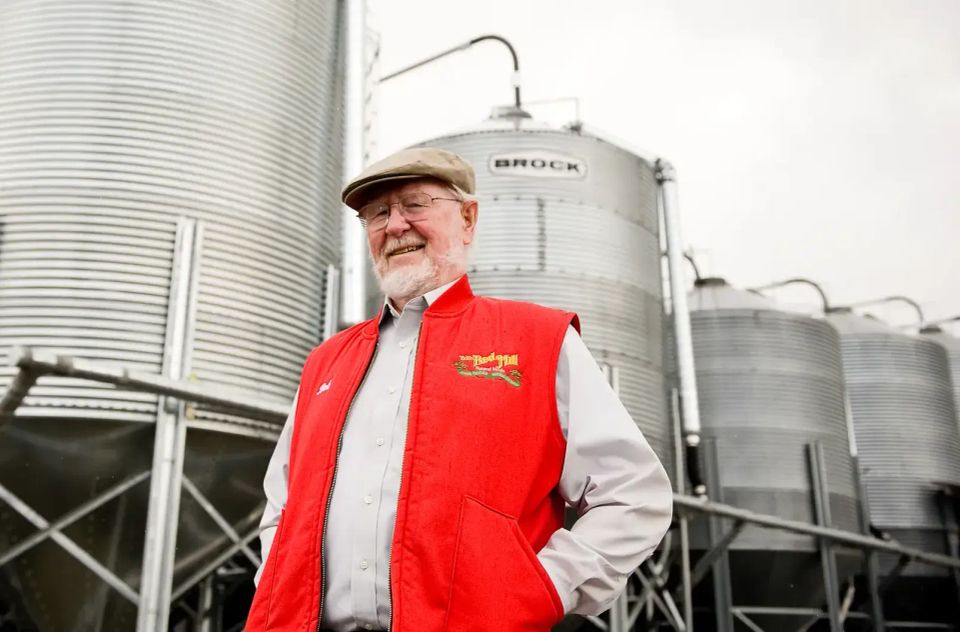
On February 15, 2010, Bob Moore turned 81. He spent his birthday at work, the way he had for decades: at Bob's Red Mill in Milwaukie, Oregon, the natural-foods company he'd built from a stone-burr mill and a mailing list. That morning, he stood up in front of 209 of his employees and gave them the company.
He could have sold it. Major food corporations had been calling for years. "As the company grew and became more successful, Bob found himself fending off one offer after another — large corporations that wanted to buy Bob's Red Mill," the company says on its website. He told Fortune they thought he was "just a lame-brained idiot" for refusing. The reasoning he gave wasn't sentimental: "I don't think there's anybody worthy to run this company but the people who built it." The frame underneath was older than business school: "The Bible says to do unto others as you would have them do unto you." According to the company, Moore and his wife's mission was to provide wholesome food to people around the world and provide their employees with financial security.
On Bob’s birthday he wasn’t excited for a gift or a cake. He was excited to give back to the employees who had helped him to build a business that was successful beyond his wildest dreams.
Three thousand miles east, in Norwich, Vermont, King Arthur Baking has been milling flour since 1790. When it came time to hand over the company that had been in their family for generations, Frank and Brinna Sands spent eight years converting ownership of the company to their employees. By 2004 the company was 100% employee owned and in 2007, King Arthur became one of the founding Certified B Corporations, locking the values in alongside the ownership. The board has committed to what they call an "evergreen ESOP," designed to stay employee-owned in perpetuity.
Two flour companies. Different decades, different states, same instinct. Together they account for more than 1,100 employee-owners and a couple of products you probably have in your kitchen.
The numbers are quiet but real. At King Arthur, the ESOP and profit-sharing have historically added more than 25% to a worker's annual pay. That's roughly an extra three months of compensation, every year. Part-time, temporary, and seasonal employees count too, as long as they clock 800 hours a year. Entry wages were raised above $15 an hour in 2022. The company's overall B Corp Impact score is 116.4, more than double the median for certified businesses. At Bob's Red Mill, the ESOP was self-financed: zero bank debt, every dollar of cash flow returning to the people who milled the grain. The employee-owner count tripled in the decade after Bob's birthday, going from 209 to more than 600 as the company grew.
We've been building a scoring framework that helps us tell genuine ownership apart from the marketing version, and we'll be sharing it publicly soon. Both of these companies land near the top of any scale we've found. We are still learning what good looks like at full scale, and companies like these are how we keep learning.
What's most worth listening to is what the workers themselves say.
Rosie Wawryzniak works on King Arthur's merchandise team. Asked a few years ago what employee ownership means in practice, she said: "These jobs are not going to be sent overseas when it's an employee-owned company. People really care about getting meat from happy cows or happy chickens. Why would you not want products from happy people? Customers benefit when they're getting a better quality product from happy people."
We had been crediting the "happy people" line to King Arthur as a corporate brand voice. It turned out to be a worker explaining this important difference.
Kye Ameden, an associate recipe editor at King Arthur, describes how the trust between employee-owners feels from the inside: "There's an underlying sense of trust between EOs. It means that you're peers with all the other EOs, no matter what their title is or their authority. Everyone's voice is respected and appreciated." Julie Porter from the warehouse describes what shows up under stress: "If somebody on the team gets breast cancer, everybody comes together and rocks pink for an entire week before her surgery to show her that we're here to support her. That happened in the warehouse last week."
At Bob's Red Mill, Dawn Hughes has been with the company fourteen years. She started as a server in the Whole Grain Store and has worked across cooking, production lead, events, and now reception and HR. Asked what the biggest change has been since she started, her answer was direct: "The biggest change is that we are now an employee-owned company." She didn't lead with the volume, the new buildings, the product line. She led with the structure of who benefits.
Bob Moore died on February 10, 2024, fourteen years after the birthday meeting. The mill kept running. The grain kept moving. The ESOP held. New flour products launched in November 2025: Super-Fine Cake, Self-Rising, High-Fiber. Trey Winthrop is still CEO. The company is doing what Bob designed it to do, which is keep going without him and benefit those who are building the value. That was the point.
In July of last year, King Arthur's CFO Brock Barton sat at a Senate HELP Committee witness table and testified about employee ownership in front of a bipartisan audience. The committee was considering the Employee Ownership Financing Act, a $500 million federal financing program to help workers buy companies. King Arthur was the model. America's oldest flour company, called to Capitol Hill to describe how it survived 235 years and is still thriving due to its worker owners.
What the founders at these two companies understood is that succession isn't just a transaction. It is a transfer of who gets to benefit from what gets built next. Most American food brands hit the founder-exit moment and get sold to outside buyers. The brands kept going, but the worker stake usually didn't survive the handoff. King Arthur and Bob's Red Mill chose differently, and their workers got an inheritance that continues to grow.
There are founders facing this same decision right now. The organizations that help them choose the next path are real, and their phone lines are open. Common Trust designs employee ownership transitions. Project Equity converts privately held businesses into employee-owned companies. The ICA Group has been doing this work for decades. Apis & Heritage finances ownership transitions for businesses with diverse workforces. EOX is building the network that connects all of them.
If you own a company, if you know a founder thinking about exit, if you have capital looking for something that lasts, these are the people to call.
Open your pantry. There's a King Arthur bag, a Bob's Red Mill bag, probably both if you bake. They look like every other flour bag on the shelf, but the flour inside them was milled by people who own what they made. That is the whole story.
And it could be the story for a lot more products. There are more Bob Moores out there. Some of them are turning 81 right now.
Member discussion