
The Bookstore is Reading You
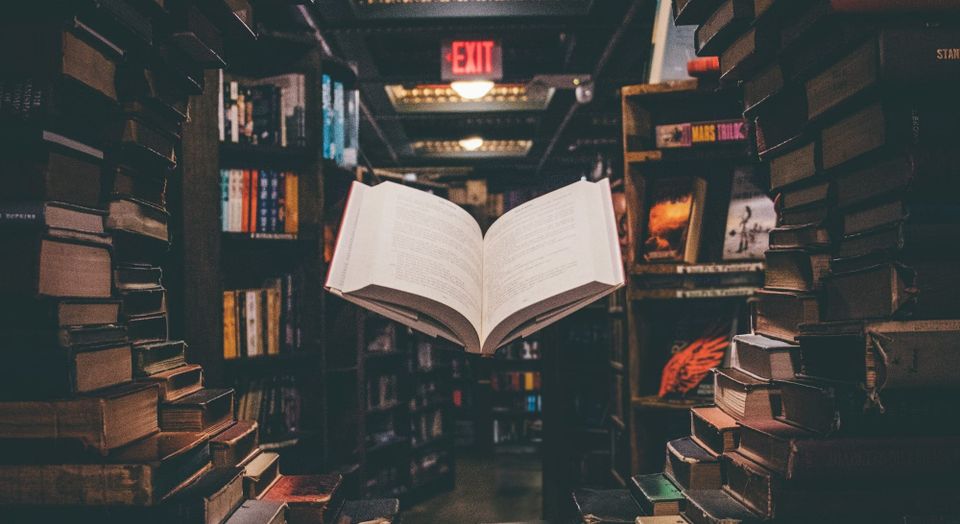
For thirty years, the biggest internet companies have leaned on the same metaphor to defend a law that shields them from responsibility for what happens to people on their products. They are like a bookstore. A bookstore doesn’t write the books. It just shelves them. If a customer picks up a book full of bad ideas, that isn’t the bookstore’s fault.
In 1996, when Congress wrote the law that became the foundation of every “we’re just a platform” defense, this was a fair description of what the internet was. Slow. Text-based. A few thousand websites and dial-up modems. The bookstore metaphor matched the technology.
The technology has changed. The metaphor hasn’t.
Imagine with me a bookstore that works like Facebook, TikTok, Instagram and other social media.
A young girl walks down the street after school. Twelve years old, maybe thirteen. It hasn’t been a good day. A friend said something unkind, and she hasn’t been able to stop thinking about it. She pushes open the door of a bookstore she has been to before.
In the entryway, just inside, there is a table of new books. It is the first thing she sees. The cover that catches her eye is bright and clean and confident: Clean: Thirty Days to Feel Lighter in Your Body. She picks it up. She flips through a few pages.
What she doesn’t see is the camera in the corner of the ceiling. It has been watching her since she walked in. It registered the angle of her shoulders, where her eyes went, which spine she reached for, how long her hand lingered on the cover.
While she reads, the rest of the table is quietly rearranging itself. Books she might also like are sliding into the slots near her hand. Books that pushed harder, that promised more, that sat one click further down the rabbit hole. The shelves behind her are shifting too. The history section, where she had been heading, is dimming. The store has decided, in the space of a few seconds, that there is a more profitable version of this visit than the one she planned.
She moves to the next book without quite realizing why. This one is a memoir, also about a body, but the voice is different. The author hated her body. She has spent the whole book hating it. The girl recognizes the feeling. The book makes her feel seen, in a way that does not help. She reads.
The cameras update. The shelves shift again. The titles get more honest about themselves and more cruel. Soft promises become sharper ones. The lights in the corner where the novels live are dimmer now. So is the section on crafts, on cooking with your grandmother, on anything that might pull her sideways out of this aisle.
She leaves the store with two books she did not come in for, two hours later than she meant to leave. They have not made her feel any better. She doesn’t really know why she has them.
During her visit, the bookstore logged everything she touched, every page she lingered on, every face on every cover that held her eye for one second longer than the rest. The store now knows her better than her best friend does. It knows things about her she has not said out loud.
When she comes back tomorrow, the bookstore will be ready for her arrival. By the time her hand reaches the knob, the table by the entrance has already been rearranged. The shelves have already been rebuilt. The lights are already dim in the directions she might have gone. She will walk in, and the bookstore will lead her back to the place she last left.
The lawyers who wrote Section 230 in 1996 did not imagine this bookstore. They couldn’t have. The store I just described doesn’t shelve books. It studies a person and designs the room around her, in real time, toward one objective: keep her here, keep her looking, keep her coming back. It does not make money by helping her find the right book. It makes a fortune by keeping her in the store, showing her ads, and gathering data.
This is not a hypothetical. Inside Instagram, before the lawsuits started, the company’s own researchers ran a survey of nearly 240,000 of its users about the harms they were experiencing. The results were so damning that internal access was restricted to a group of less than .1% of employees. The next year, the team building features to address those harms was allocated zero new dollars. None of this leaked from the outside. The company knew.
If you wanted to design that bookstore, that is exactly what it would take. Cameras the user can’t see. Shelves that move themselves. Lights that dim. Research that documents what the system is doing and a decision, over and over, not to spend any money fixing it.
The defenders of this bookstore have an answer ready, and it is the same answer every industry reaches for the first time it is asked to take responsibility for its product. They say that holding the giants accountable will hurt the little guy. The garage startup with a chronological feed. The small online forum. None of those companies built the store in the metaphor. None of them ran a survey of 240,000 of their users about the harms of their product. None of them had the money to run that survey or the lawyers to suppress it. The companies who built the bookstore are some of the largest businesses in human history, and the conversation is about whether they have to meet the basic responsibility every industry their size has eventually been required to meet: don’t ship a product you’ve documented is hurting children, and don’t lie about what it does.
A growing list of people are doing the work of forcing that conversation into the open. State attorneys general in more than forty states have lawsuits underway. A steady stream of whistleblowers are expanding on Frances Haugen’s testimony, bringing their own documents to Congress, most recently Jason Sattizahn and Cayce Savage. Arturo Béjar, who ran the 240,000-person survey inside Meta, is testifying everywhere that will have him. Parents who lost children to these products are building coalitions and foundations of their own, and they have not stopped showing up.
When someone tells you that today’s platforms are just bookstores and we have to leave them alone, ask them which bookstore they mean. The one from 1996, where the books sat on the shelves and waited for you. Or this one. The one with cameras in the ceiling, that watches what your daughter picks up, that rearranges the front table before her hand even reaches the door.
That is not a bookstore. It is something else, and we get to name it accurately before we decide what to do with it.
Member discussion